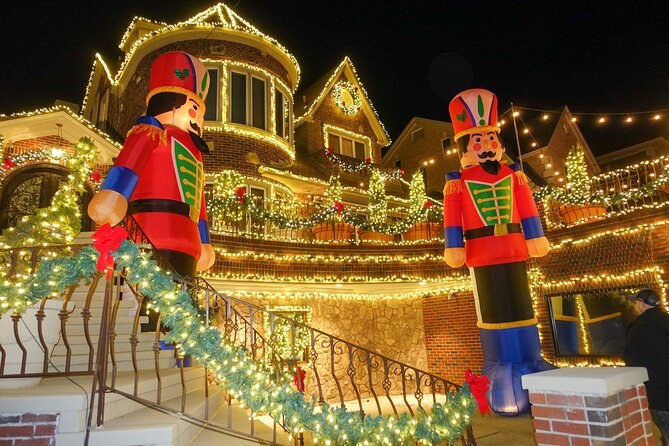
History of the Dyker Heights Christmas Lights
This started with one house and one woman in 1986. Everything else — the coaches, the hundred thousand visitors, the professional installers, the traffic agents — followed from that, and it followed fast. The neighbourhood it happened in was already ninety years old and built for exactly this kind of showing off.
Dyker Heights before the lights
Development began in October 1895, when Walter Loveridge Johnson started building on the hill between Tenth and Thirteenth Avenues from 79th Street to 86th. The plots were large, the houses were detached, and the best of them took the top of the hill around Eleventh Avenue and 82nd Street, a hundred and ten feet above the harbour.
That is the same ground the lights are on now. A neighbourhood of substantial detached houses with front gardens and long facades is, as it turns out, the ideal canvas — a row of brownstones could not do this.
Where the name comes from
From the Dyker Meadow and Beach that the development overlooked. The meadow was drained by dykes, and the dykes are traced either to the Van Dykes — one of the original New Utrecht families — or simply to the structures they built. Either way the name is about water management, which is a very Brooklyn origin for the brightest street in New York.
The Saitta House, 1899
Standing at 1135 84th Street, in the middle of the busiest block, is a two-and-a-half storey Queen Anne built in 1899 by the architect John J. Petit for Beatrice and Simone Saitta. The land cost $2,700 and the house cost $14,000.
It was added to the National Register of Historic Places on 30 May 2007, and the listing came about because a New York University medical student wrote his college thesis on the neighbourhood's under-appreciated history. Most of the people photographing this block in December have no idea they are standing in front of it.
Lucy Spata and the winter of 1986
Lucy Spata began decorating her house on 84th Street in 1986, after her parents died, in memory of a mother who had loved Christmas. She has said she thought of the people who could not get to Rockefeller Center. The angels she puts up each year are for her mother.
The neighbours' first reaction was not admiration. They objected to the traffic, which tells you how quickly it grew. Asked in 2023 whether she would ever stop, Spata's answer was short: "When you go pay my mortgage, then I'll stop."
The dates that are actually documented. Everything between 1986 and now is one house at a time.
| Year | What happened |
|---|---|
| 1895 | Walter Loveridge Johnson begins developing the hill |
| 1899 | The Saitta House is built at 1135 84th Street |
| 1980s | Newspaper reports and the first tours describe displays on the blocks |
| 1985 | Lou Singer begins running tours through the neighbourhood |
| 1986 | Lucy Spata decorates 1152 84th Street in memory of her mother |
| 2007 | The Saitta House joins the National Register of Historic Places |
| Today | More than 100,000 visitors a season, and city traffic control to match |
How one house became a neighbourhood
It spread the way these things do: a neighbour matched it, then the neighbour opposite, then the block. By the mid-1980s newspaper reports were describing the displays and Lou Singer was already running tours through the area, which means the phenomenon was sellable within a few years of starting.
Today the crowd is large enough that the city adds bins and traffic control for the season, and eight bus routes and two subway lines carry people who mostly walk the last mile. The route page covers where they all walk.
Why this hill and not another Brooklyn street
Geometry, mostly. Johnson built detached houses on large plots with deep front gardens and long unbroken facades, which is a canvas. A terrace of brownstones has no lawn to put a nutcracker on and no roofline to run a garland along, and that is why the display stops roughly where the housing stock changes.
The hill helps too. The ground rises to about a hundred and ten feet around Eleventh Avenue, so the houses step up as you walk and a whole block is visible at once rather than one facade at a time.
The decorators, and what a display costs
Most of the largest displays are not put up by the householders. Firms including B&R, run by James Bonavita, and DiMeglio Decorators install and remove them, and a full house runs somewhere from $3,000 to $10,000 or more for a season depending on its size.
The running cost is smaller than people assume. Everything is LED now and on timers, and one resident's summary of the electricity bill is that "it's no more expensive than running the air conditioner all summer long".
What the residents say about the competition
They say there isn't one. "It's never been a competition kind of a thing," one resident told a Brooklyn magazine, and residents who do not decorate report no pressure to start. The rivalry is a story visitors bring with them.
What the residents do ask for is manners. Brooklyn Community Board 10's district manager put it as plainly as it can be put: "We do ask that everyone is mindful that it is a residential community." Forty years in, that remains the only rule.
Frequently asked questions
How did the tradition start?
One house, in 1986. Lucy Spata began decorating her home on 84th Street in memory of her mother, who had loved Christmas, and her neighbours followed. The full story is on the history page.
How many houses take part?
Nobody publishes a reliable figure, and the ones circulating online have no source behind them. What is documented is that the core is a few blocks deep, that displays are now installed by professional decorating firms, and that a full house costs several thousand dollars a season.
What do the residents think?
Mixed, and they say so publicly. The community board's district manager asks visitors to remember that it is a residential neighbourhood, and residents have said the traffic was the first thing the neighbours objected to. Most of the households doing it have been doing it for decades by choice.
Are the houses open to visitors?
No. These are private homes and the display is meant to be seen from the pavement. Stay off the paths and lawns, keep the noise down after nine, and take your rubbish with you.
See the street the story starts on
Every guided departure walks 84th Street, and most of them stop where the first house still stands.
The history explains the blocks; the route page tells you how to walk them and the dates page tells you when. A Dyker Heights Brooklyn Christmas Lights tour covers the getting there, and every departure is on Dyker Heights Christmas Lights Tours.
Tours that put the history in the commentary
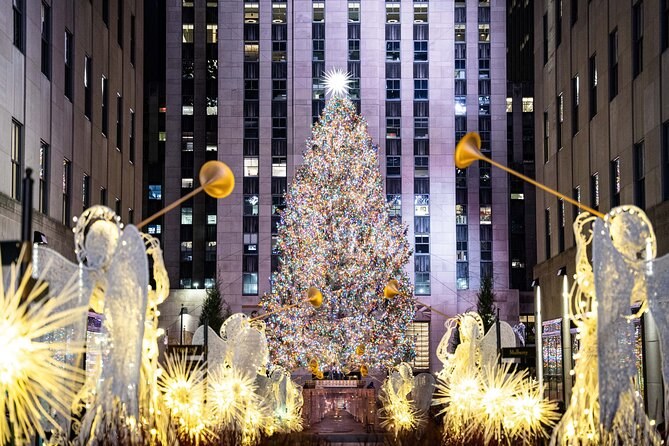
NYC Holiday Lights and Dyker Heights Luxury Bus Tour
Licensed guideHeated vehicleCoach travel
From $75 per person
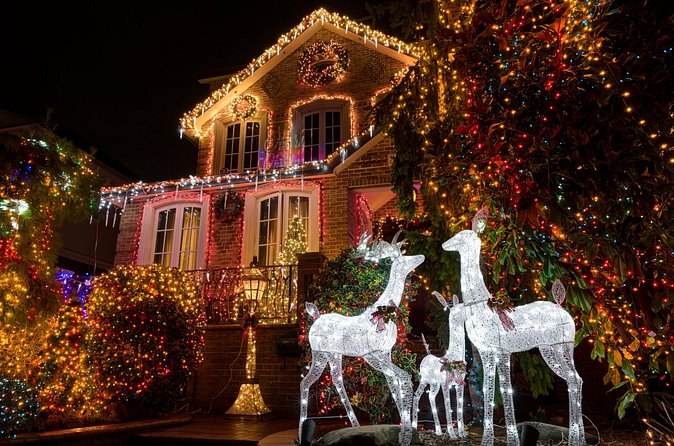
Tour New York City Contrasts and Dyker Heights Lights
Portuguese & SpanishHeated vehicleWiFi on board
From $80 per person